
Railways and terrain
A railway cannot argue with a gradient, so its alignment is a survey of the terrain it crosses.
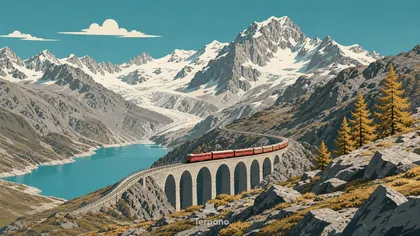
Gauge is the first tell. Narrow gauge buys a smaller turning radius, which is what lets a line follow steep contours instead of cutting broad benches through rock. Where even that is not enough the route gains height by spiralling through tunnels inside the mountain, or holds its elevation on a viaduct rather than descending into every ravine and climbing back out.
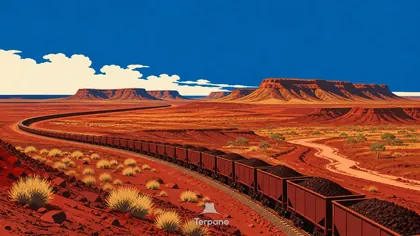
Rolling stock says what the line is for. Open wagons in enormous numbers mean a dense bulk cargo that can be tipped rather than unloaded, and a train long past reason means a remote origin where each journey has to pay for itself. Electrification on a hot lowland corridor climbing toward a high interior is a decision about imported fuel as much as about gradients.
3 puzzles that turn on this

English · Deutsch · Español · Français · Italiano · Português · Русский · 简体中文 · 繁體中文 · 日本語 · 한국어