
Draa Valley, Morocco
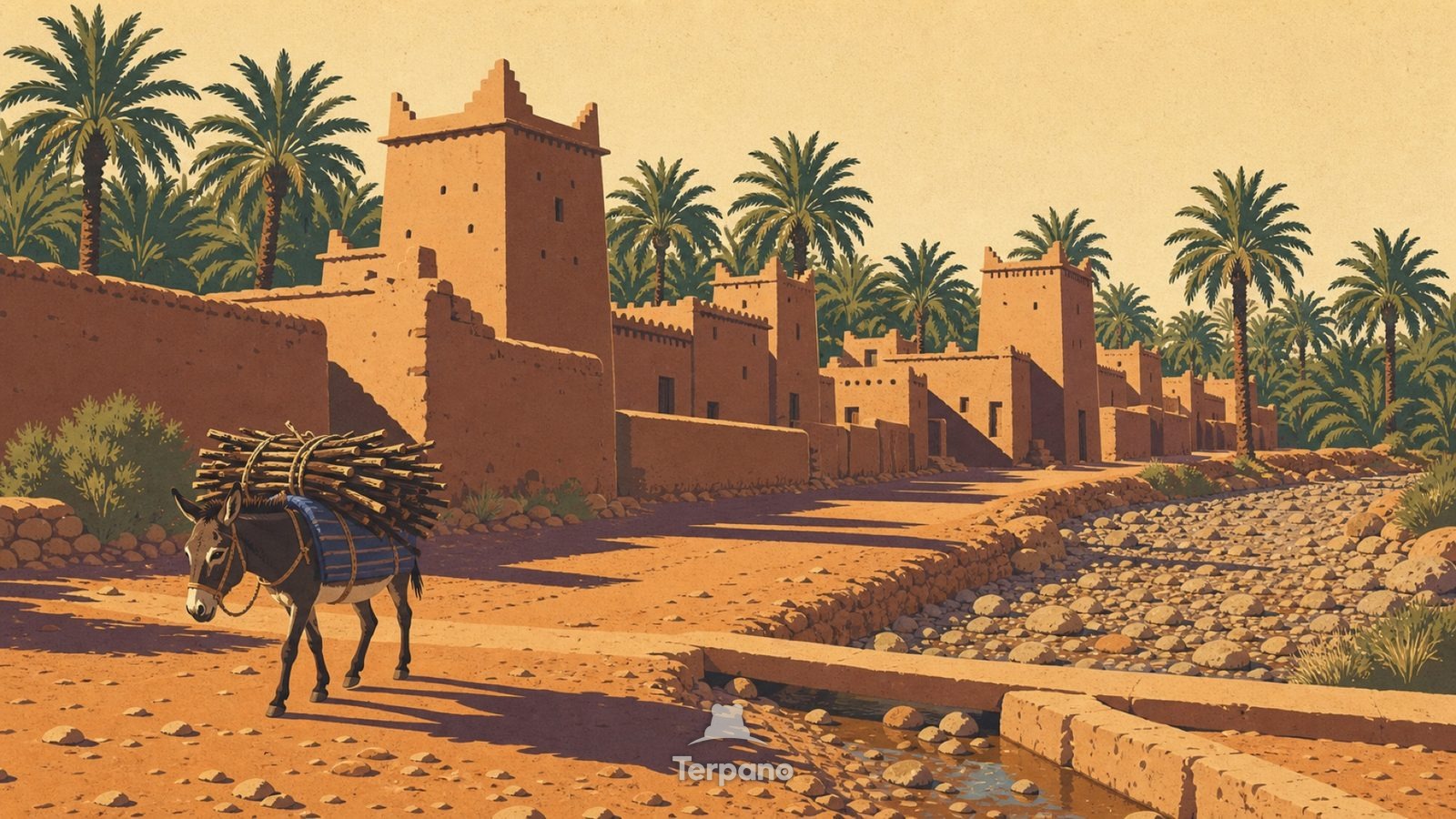
This scene is an original illustration set in Draa Valley, Morocco. It lies in the subtropics, where the climate is hot desert — evaporation far outruns rainfall.
Rammed-earth houses with squared corner towers and stepped crenellated eaves line an unpaved lane. A dense date-palm canopy rises behind the rooftops. A loaded donkey walks the lane, and the ground is bare gravel and dust. The earth walls take the low afternoon sun and glow the same colour as the ground they were made from.
Why are desert walls built this thick in rammed earth?
Rammed earth is thermal mass: thick walls hold the night's cool through a scorching day and release it back after dark. It also means the building material was underfoot. Date palms need intense heat and constant water at the root, so a palm canopy in bare desert marks a watercourse or a spring. Together they describe an oasis settlement on the desert's edge, not in its interior.
Terpano is a free daily geography puzzle. You study one original illustration, place a pin on a borderless terrain map, and see how close you were. There is no account and no sign-up; progress stays in your own browser. It plays in 11 languages.
Part of Built for the climate — A house is a set of answers to questions the weather keeps asking.
Play this puzzle Play today's puzzleMore puzzles in a similar climate
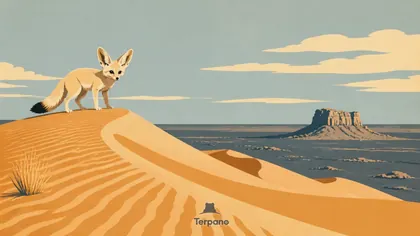 Fennec Fox among Saharan DunesCentral Algerian Sahara
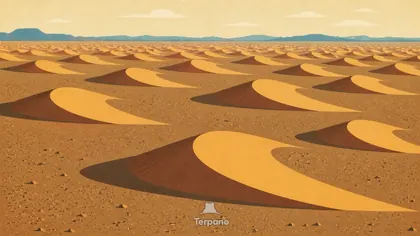 Crescent Dune FieldAtlantic Sahara, Mauritania
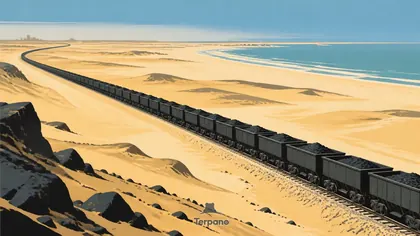 Ore Train between Desert and AtlanticNouadhibou Region, Mauritania
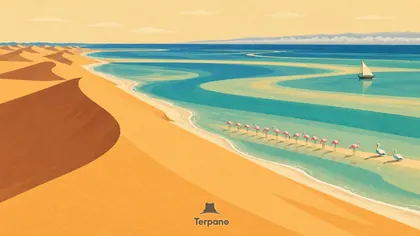 Sahara Dunes Meet the Atlantic ShallowsBanc d'Arguin, Mauritania
English · Deutsch · Español · Français · Italiano · Português · Русский · 简体中文 · 繁體中文 · 日本語 · 한국어